
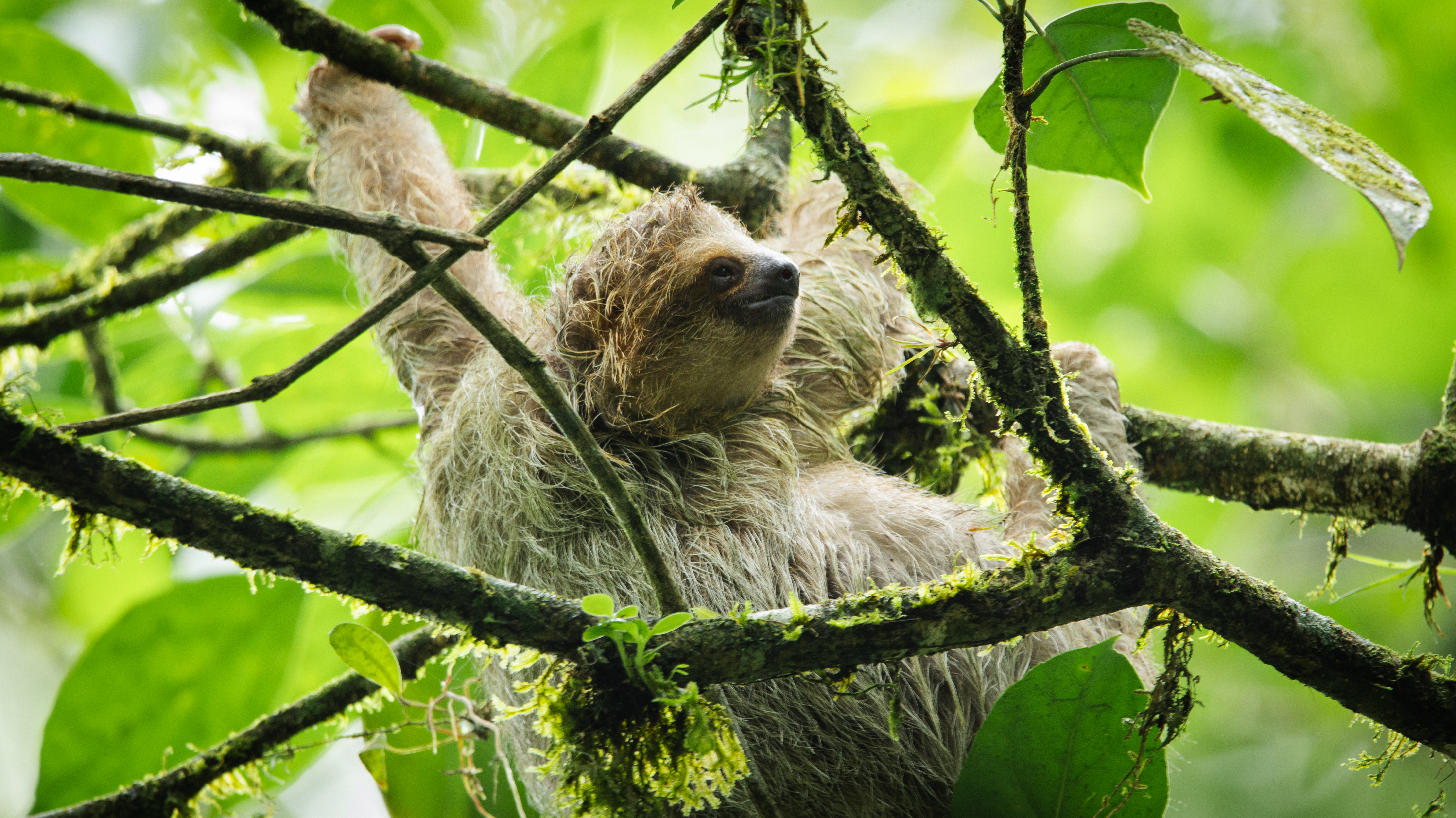
There are few animals that make people stop in their tracks quite like a sloth.
Perhaps it's the permanent smile that seems to stretch across its face. Maybe it's the deliberate, unhurried movements that remind us life doesn't always have to move so fast. Or perhaps it's simply the joy of spotting one high in the rainforest canopy, peacefully going about its day, completely unconcerned with the world below.
Whatever the reason, sloths have become one of Costa Rica's most beloved wildlife icons. In fact, in 2021, Costa Rica officially declared both the Hoffmann's two-toed sloth (Choloepus hoffmanni) and the brown-throated three-toed sloth (Bradypus variegatus) as National Symbols of the country's wild fauna, recognizing their role as ambassadors for conservation and sustainable tourism.
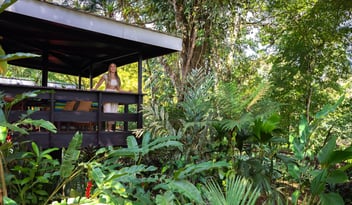
For guests at Chachagua Rainforest Hotel, that's especially exciting because spotting a sloth here isn't unusual. Thanks to our protected rainforest and abundant wildlife, Chachagua is one of the best places in Costa Rica to observe these remarkable animals in their natural habitat.
Costa Rica's Most Relaxed Celebrity
In Spanish, sloths are called perezosos, which literally means "the lazy ones."
It is an affectionate name, and one that fits their famously slow lifestyle.
But "lazy" doesn't tell the whole story.
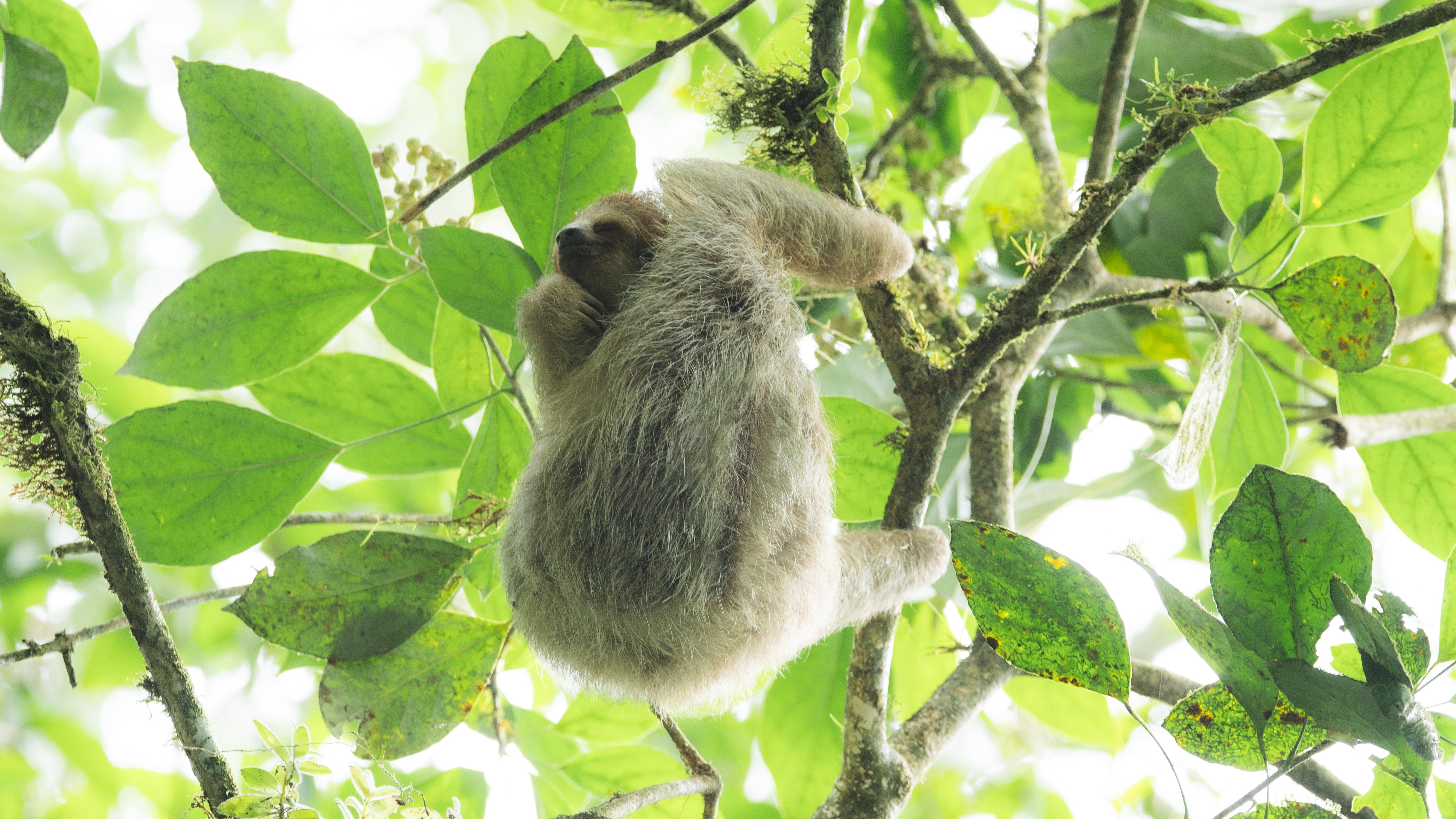
Sloths move slowly because it helps them survive. Their low-energy lifestyle allows them to live on a diet of leaves, one of the least nutritious foods in the rainforest. Every movement is deliberate, conserving precious energy while helping them blend almost perfectly into the surrounding trees.
That famous smile? It's not really a smile at all. The gentle curve of a sloth's face gives it a permanently content expression, one of the many reasons people instantly fall in love with these remarkable animals.
For predators searching from below, a motionless sloth often looks more like a patch of moss than an animal.
Sometimes, the slowest strategy is also the smartest.
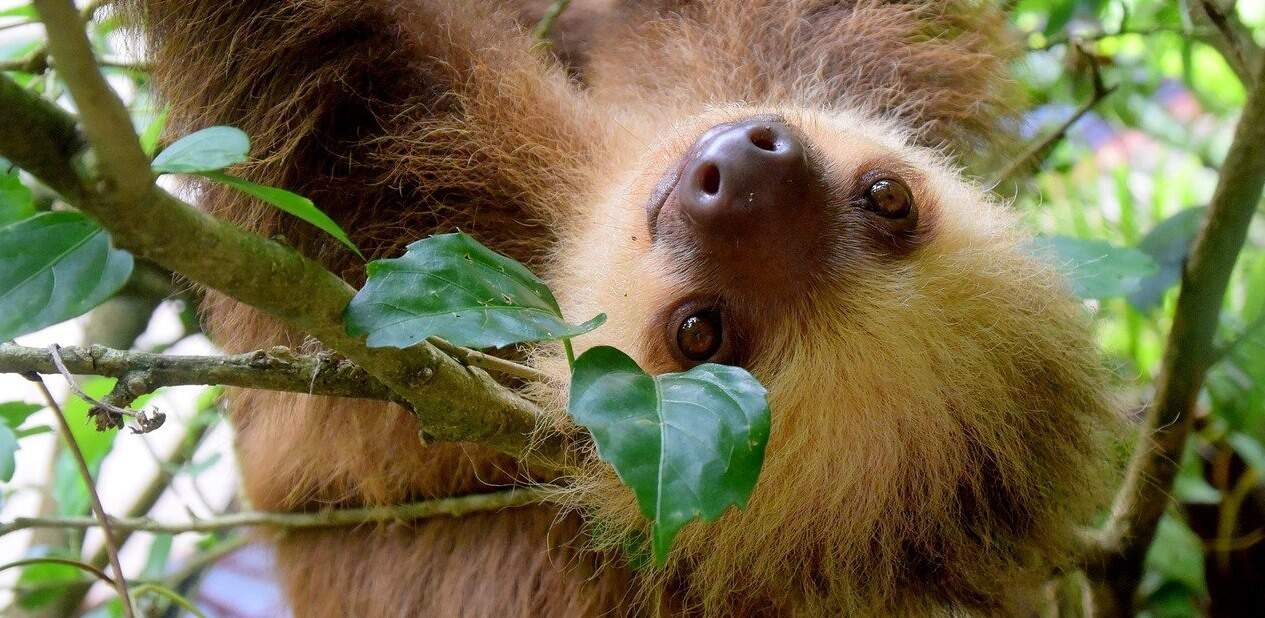
Two Species, One Extraordinary Forest
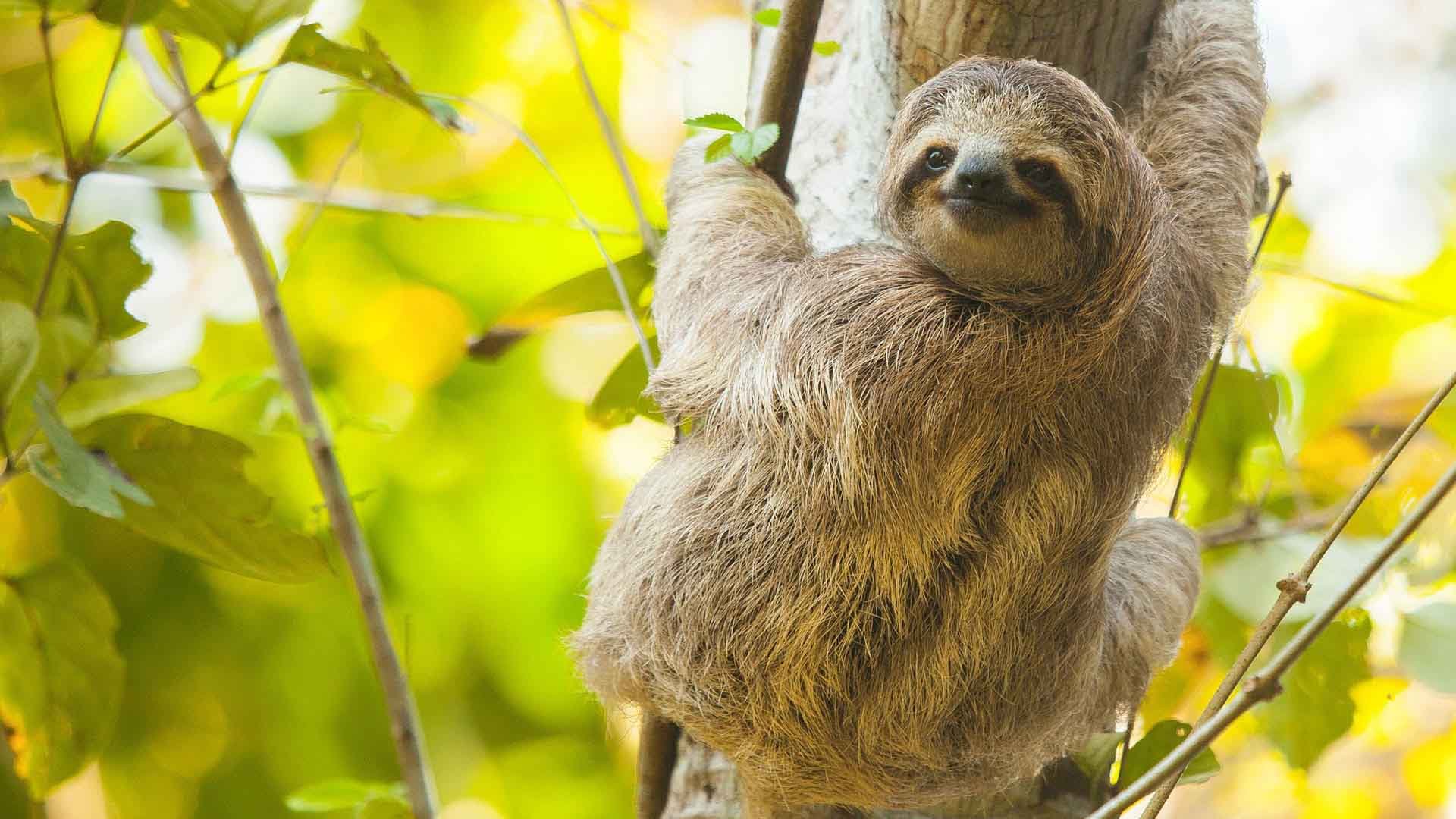
Costa Rica is home to two different species of sloths, and remarkably, both can be found in the forests surrounding Chachagua.
The brown-throated three-toed sloth is the one most travelers recognize. Its gentle face and subtle expression have made it one of the country's most photographed animals. These sloths spend nearly their entire lives suspended upside down among the treetops, feeding primarily on leaves.
The Hoffmann's two-toed sloth is slightly larger, more active at night, and has a shaggier appearance. Despite its name, it actually has two claws on its front feet and three on its back feet, while the three-toed sloth has three claws on all four limbs.
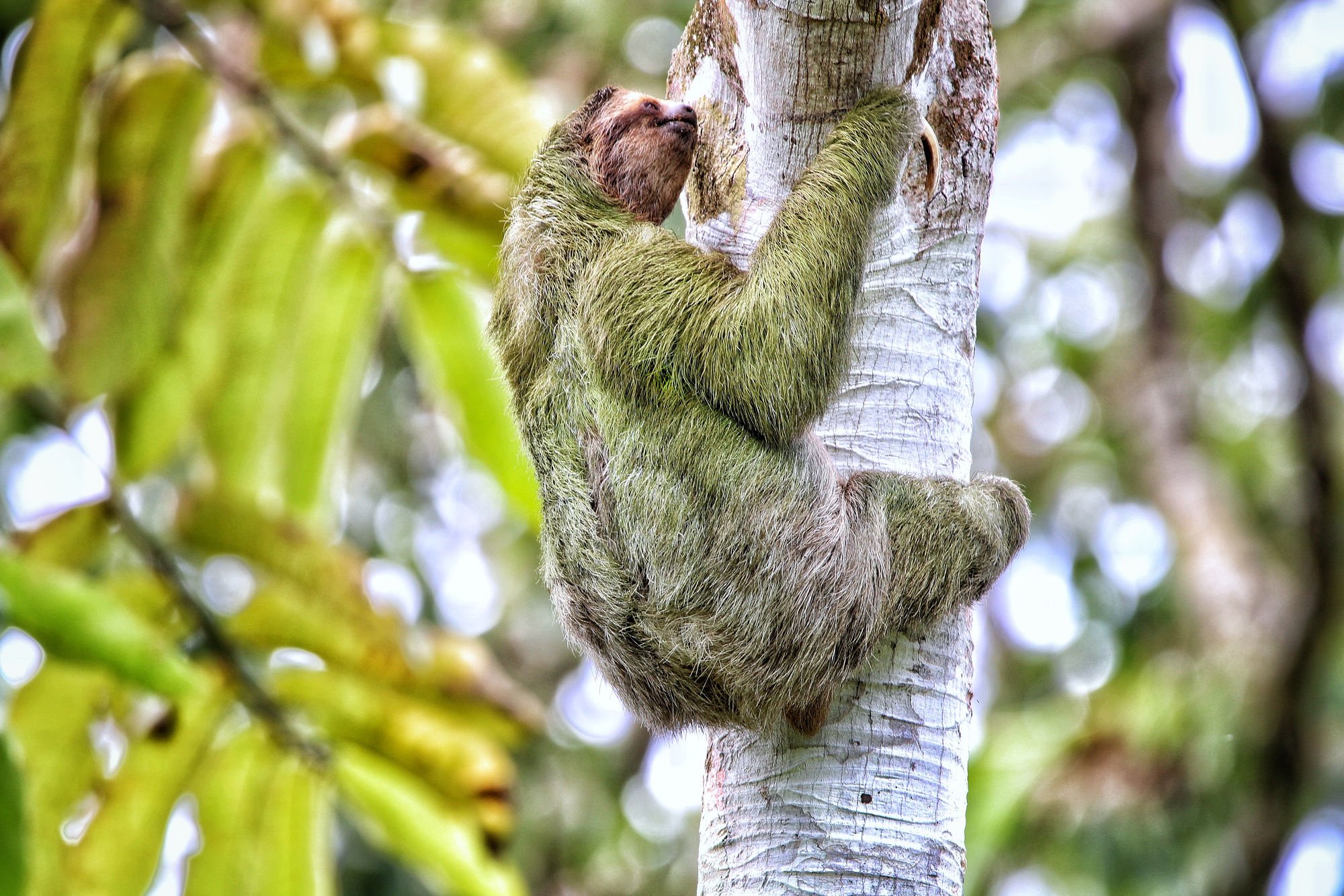
One of the most fascinating things about sloths is that they carry an entire miniature ecosystem in their fur. Tiny algae grow among their coarse hairs, giving many sloths a greenish tint that helps camouflage them against the forest canopy. Their fur can also provide habitat for moths, insects, and microscopic organisms, making a single sloth a thriving world of its own.
Both species have become symbols of Costa Rica's remarkable biodiversity and its commitment to protecting the forests they call home.
The Best Wildlife Encounters Happen Naturally
One of the joys of staying at Chachagua is that every sloth sighting is completely wild.
You might discover one while walking to breakfast.
Or notice one curled high above a rainforest trail.
Sometimes our naturalist guides quietly point toward what seems like an ordinary tree. As your eyes adjust, a sloth slowly comes into focus, perfectly camouflaged among the leaves.
On especially memorable days, guests may spot a mother carrying her baby, one of the rainforest's most heartwarming sights. Young sloths spend their first months clinging tightly to their mothers, learning how to navigate life high in the canopy before venturing out on their own.
These are not scheduled encounters or staged experiences. They are quiet moments shared with wildlife in its natural home.
At Chachagua, we are simply visitors in the rainforest, and every sloth sighting is a reminder that nature reveals itself on its own terms.
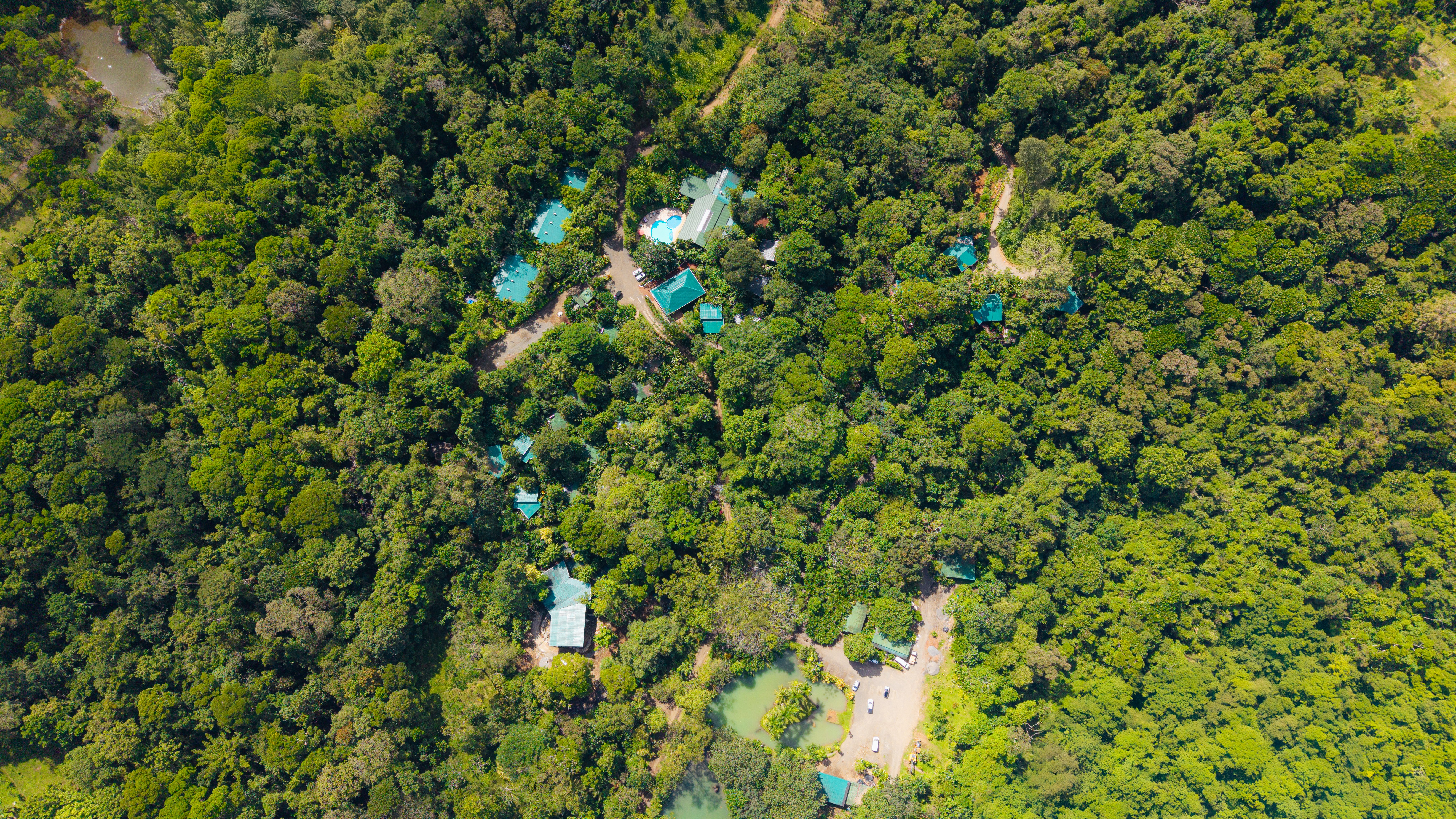
Why Chachagua Is One of the Best Places to Spot Sloths
The forests surrounding Chachagua provide exactly what sloths need: mature trees, connected canopy, abundant food sources, and a protected environment where wildlife can move freely.
Our private rainforest reserve forms part of a biological corridor between the Children's Eternal Rainforest and Arenal Volcano National Park. This continuous habitat allows sloths, monkeys, toucans, frogs, and countless other species to thrive.
Our naturalist guides know the forest intimately. They understand the trees sloths prefer for feeding, recognize the subtle clues that reveal movement high in the canopy, and, perhaps most importantly, know when to simply stop, look up, and let the rainforest reveal itself.
While wildlife is never guaranteed, sloth sightings are a regular part of the Chachagua experience because this is their home. We are simply fortunate enough to share it with them.
Often, all it takes is patience.
And perhaps slowing down just a little yourself.
More Than an Instagram Moment
It's easy to understand why sloths have become one of Costa Rica's most photographed animals.
Their expressive faces seem permanently cheerful. Their slow movements invite curiosity. Their gentle nature inspires affection.
But behind that charming appearance lies something far more important.
The sloth has become a symbol of healthy forests.
Protecting sloths means protecting the trees they depend on, preserving wildlife corridors that allow them to travel safely, and ensuring future generations can continue experiencing Costa Rica's extraordinary biodiversity.
That is precisely why Costa Rica chose to make them official national symbols, not simply because they are adorable, but because they remind us that conservation begins with protecting habitat.
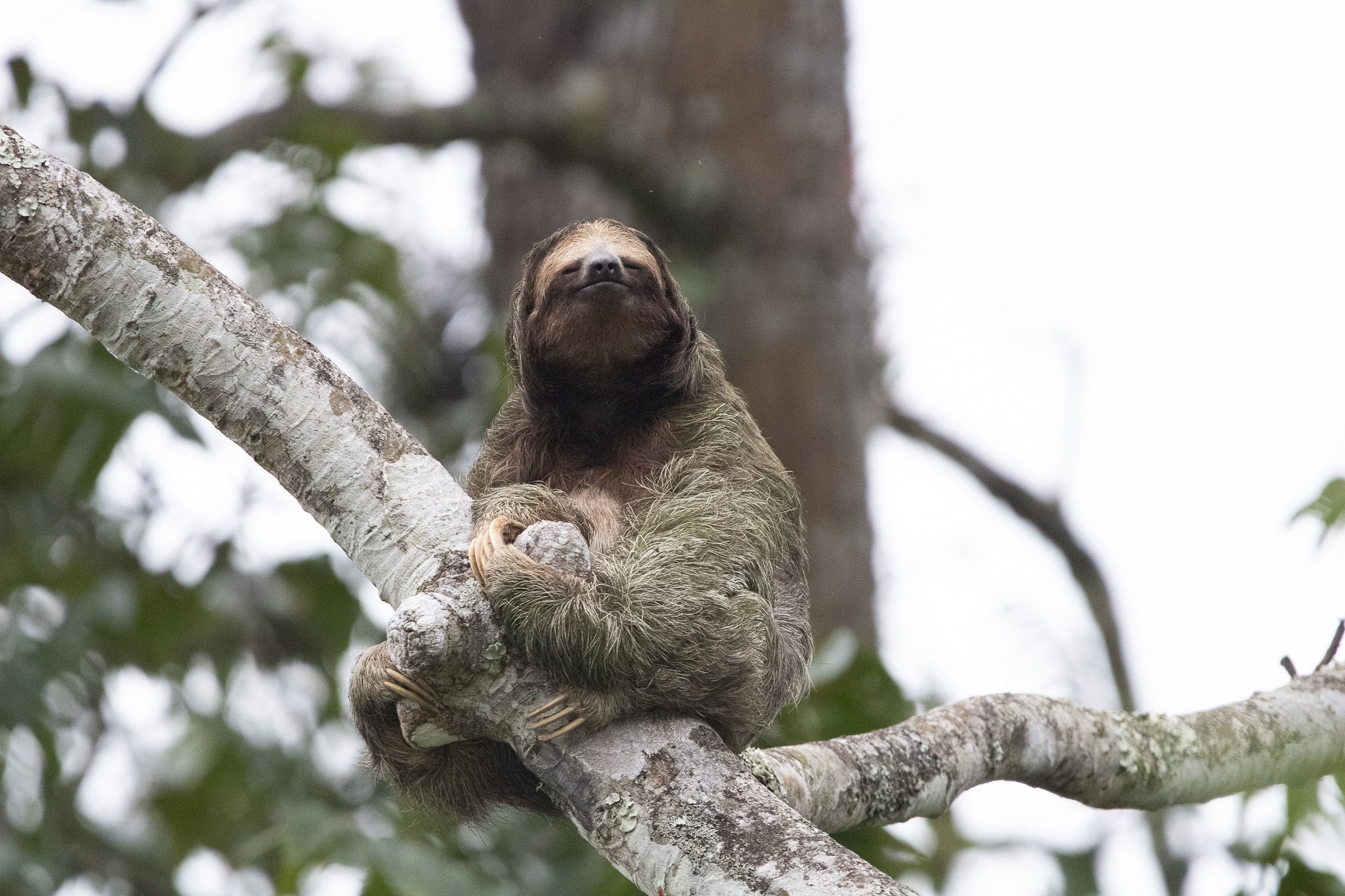
Slow Down and Look Up
Guests often arrive hoping to see a sloth.
Many leave realizing the greatest gift wasn't simply spotting one.
It was learning to move at its pace.
The rainforest rewards patience. The more slowly you walk, the more you notice. A hidden frog beneath a leaf. A toucan gliding overhead. A butterfly drifting across the trail. And somewhere high above, almost invisible until the very last moment, a sloth resting peacefully among the branches.
Perhaps that is the sloth's greatest lesson.
In a world that celebrates speed, it reminds us to pause. To observe. To appreciate the small moments that are so easily missed.
At Chachagua Rainforest Hotel, those moments happen every day. Whether it's watching a mother and her baby nestled high in the canopy or catching your first glimpse of that unmistakable smiling face, every encounter is a privilege, one that leaves many guests looking at the rainforest, and perhaps life itself, a little differently.
So, when you visit, don't forget to look up.
Costa Rica's cutest ambassador might just be smiling back.
-1.jpeg?width=352&name=ALX_5804-NEF_DxO_DeepPRIME%20(2)-1.jpeg)
.jpeg?width=352&name=DJI_0119-Edit%20(4).jpeg)