
Some destinations are remembered through photographs. Others through flavors, landscapes, or adventures.
Chachagua is often remembered through something less tangible.
A rhythm.
Even before guests fully understand where they are, the name itself seems to carry a certain cadence. Cha-cha-gua. Soft. Repeating. Almost musical. Like rainfall moving through leaves. Like footsteps along a forest trail. Like the layered sounds of the rainforest itself.
At Chachagua Rainforest Hotel & Hot Springs, that rhythm becomes part of the experience from the moment you arrive.
Not because anyone tells you to slow down, but because the rainforest does.
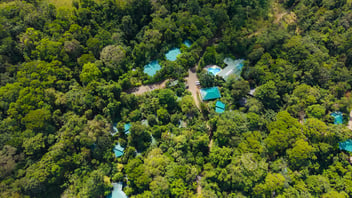
The transition begins subtly. The road narrows as you leave a faster pace behind. Trees gather more densely around you. Humidity settles softly into the air. Birdsong replaces background noise. And little by little, the pace you arrived with begins to loosen its grip.
By the time you walk through the gardens of Chachagua, the rhythm has already begun.
.jpeg?width=990&height=1237&name=image00693%20(1).jpeg)
Mornings arrive differently here.
Not abruptly, but gradually. Light filters through layers of canopy before it reaches the ground. Birds begin calling before sunrise, each species adding its own distinct sound to the forest. Leaves shift overhead with the morning breeze. Somewhere nearby, water is always moving.
Guests often wake earlier than expected, not because they have to, but because the rainforest itself feels awake.
Coffee becomes less routine and more ritual.

.jpg?width=990&height=660&name=IMG_6186-Edit%20(1).jpg)
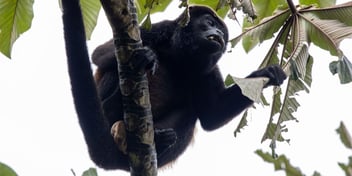
You sit on a private terrace listening to the sounds around you before speaking. Steam rises slowly from a cup of Costa Rican coffee while the forest reveals itself in fragments: a toucan crossing through the canopy, the distant sound of monkeys, rain collecting on broad tropical leaves after an early shower.
There is movement everywhere, but very little urgency.
That is part of the rhythm too.
At Chachagua, the rainforest never feels silent. But it never feels loud either. Instead, it moves in layers. Birds. Water. Wind. Insects. Footsteps along trails. Evening rain on rooftops. Thermal waters flowing into stone pools.
.jpg?width=5752&height=3232&name=guias%20(11).jpg)
Each sound folds into the next.
The experience is immersive not because the forest demands your attention, but because it gently keeps inviting it back.
Guests begin to notice changes in themselves after a day or two.
Phones remain untouched longer. Conversations stretch more naturally. Meals slow down. Walks become less about destination and more about observation. People pause more often, sometimes without realizing why.
The rainforest reshapes your sense of time.
A morning nature walk through Chachagua’s private reserve becomes less about checking wildlife off a list and more about learning how to observe differently. Local guides move slowly beneath the trees, listening as much as looking. They notice movement in branches guests would walk past entirely. Tiny frogs hidden beneath leaves. Sloths suspended almost invisibly overhead. Patterns in the forest most people never see until someone teaches them how to look.
The rhythm of the rainforest rewards attention.
Afternoons unfold with that same sense of fluidity.
Some guests leave to explore waterfalls, hanging bridges, or volcanic landscapes before returning to the hotel by evening. Others remain within the property itself, spending hours moving between rainforest trails, thermal pools, hammocks, and shaded terraces.
There is no single correct way to experience Chachagua.
That may be why the atmosphere feels so natural.
The rainforest does not rush. Neither does the experience.
Even the architecture throughout the property seems designed around this philosophy. Accommodations open toward gardens and trees rather than away from them. Outdoor showers blur the boundary between interior and exterior spaces. Terraces become places to sit without agenda. Windows frame greenery in ways that make nature feel constantly present.
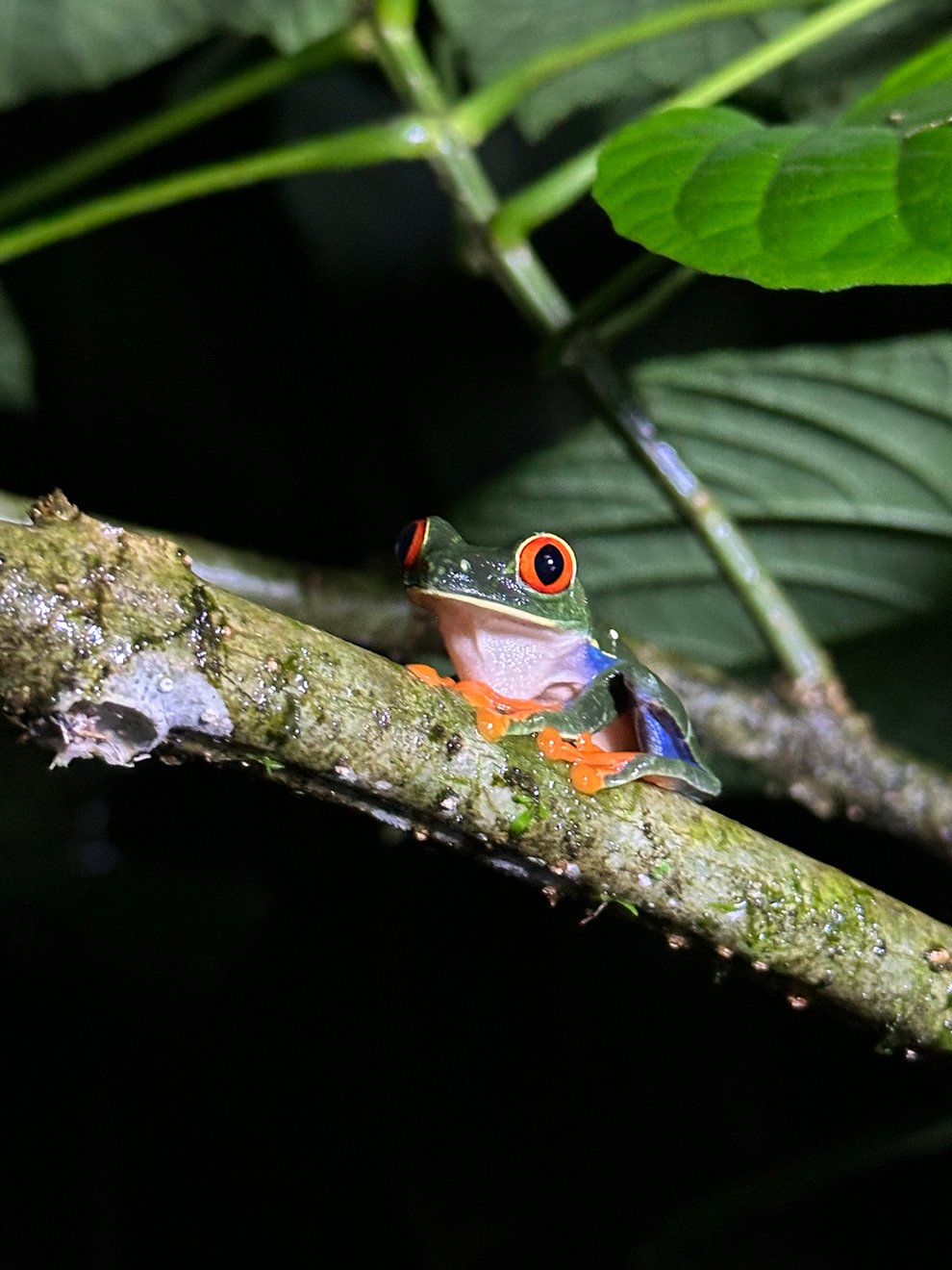

At night, the rhythm changes again.
Darkness settles quickly in the rainforest, but life continues moving through it. The sounds become deeper, slower, more layered. Frogs begin their evening chorus. Insects pulse in steady repetition. Rainfall arrives and fades unpredictably.
For many guests, nighttime becomes one of the most memorable parts of staying at Chachagua.
There is something deeply grounding about falling asleep to the sound of rain moving through a tropical forest.
The experience feels increasingly rare in a world built around interruption.
Perhaps that is why so many travelers leave describing Chachagua not only as beautiful, but restorative.
The rhythm of the rainforest creates space for something people often do not realize they have been missing: stillness without emptiness.
You are never disconnected from life here. In many ways, you feel more connected to it. But the connection feels organic rather than overwhelming.
That sensation extends beyond the property itself.
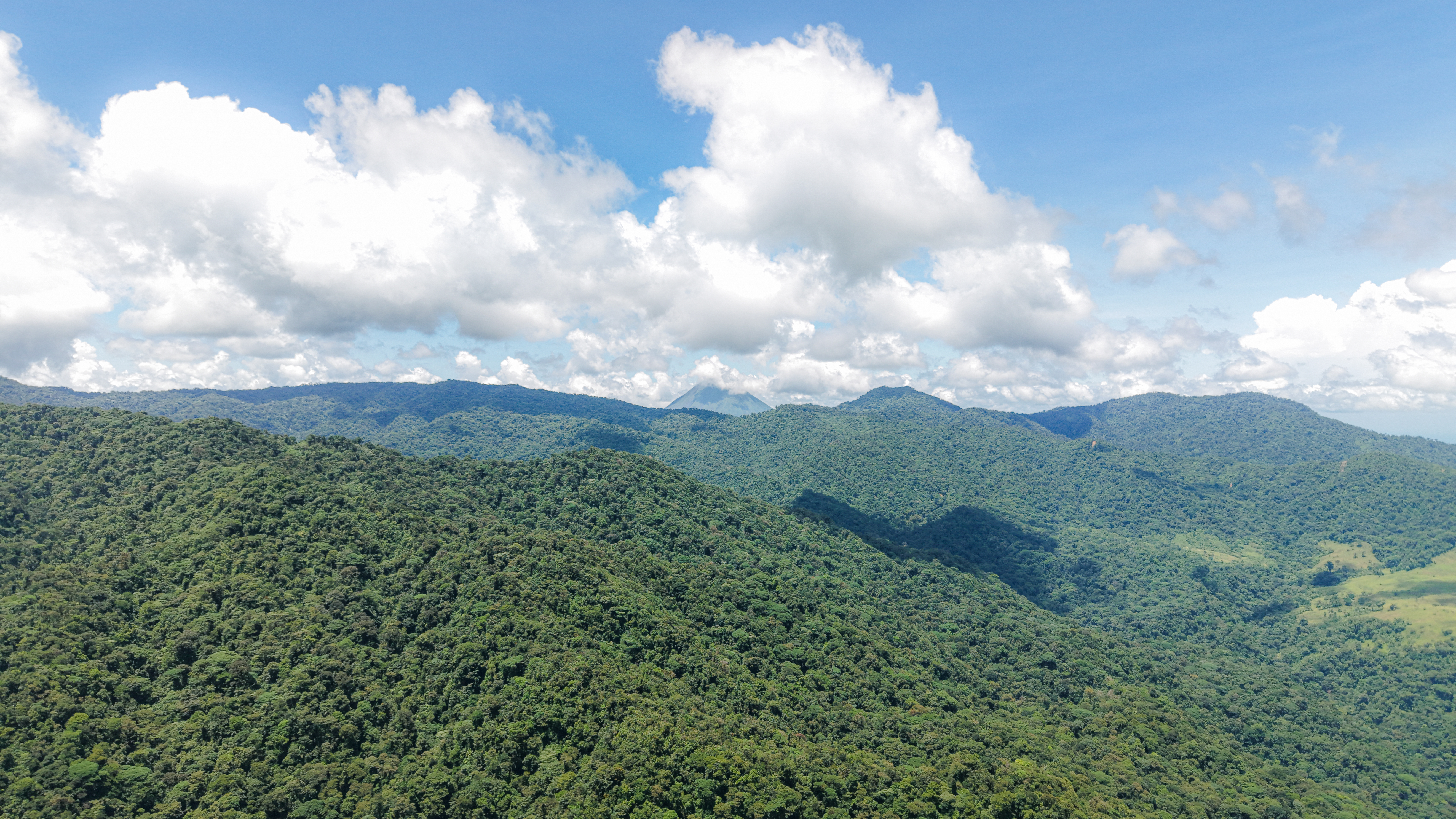
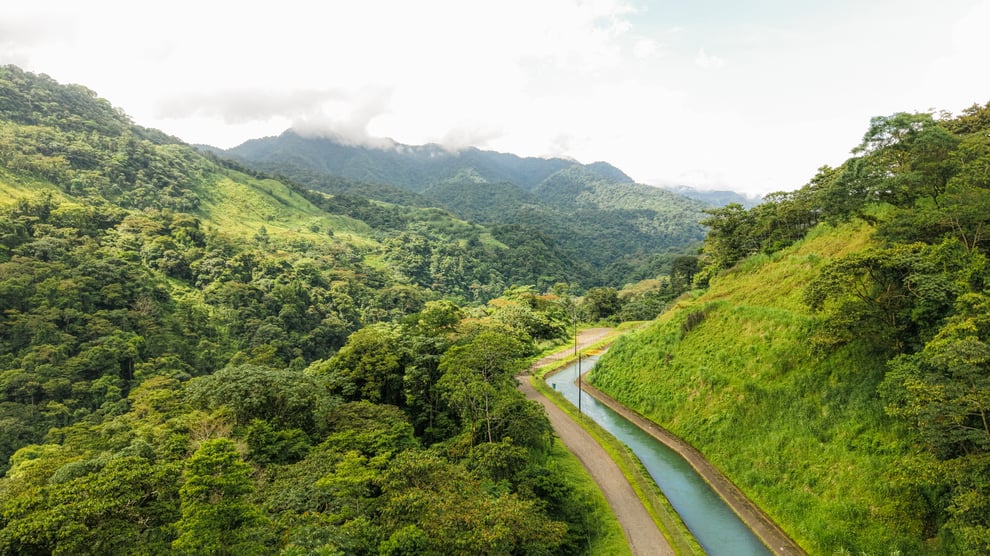
Chachagua sits within one of the most biodiverse regions in Costa Rica, surrounded by protected rainforest near Arenal Volcano National Park and the Children’s Eternal Rainforest. Wildlife moves freely through the surrounding landscape. Rivers shape the terrain.
The environment is alive in ways that many travelers have never fully experienced before.
And slowly, almost imperceptibly, guests begin adapting to its pace.
That may be the true meaning behind the rhythm of Chachagua.
Not simply relaxation. Not escape.
Alignment.
A reminder that nature has its own cadence, one that exists independently from schedules, notifications, itineraries, and noise. And when people spend enough time immersed within it, they begin to move differently too.
More attentively.
More presently.
More naturally.
Perhaps that is why the name itself feels so fitting.
Cha-cha-gua.
A soft repetition. A movement. A rhythm.
Not just the name of a place, but the feeling guests carry with them long after they leave the rainforest behind.